.
Proxemics is the study of human use of space and the effects that population density has on behaviour, communication, and social interaction.
Edward T. Hall, the cultural anthropologist who coined the term in 1963, defined proxemics as “the interrelated observations and theories of humans use of space as a specialized elaboration of culture”.
Interpersonal distances
Hall described the interpersonal distances (the relative distances between people) in four distinct zones: (1) intimate space, (2) personal space, (3) social space, and (4) public space.
Horizontal
- Intimate distance for embracing, touching or whispering
- Close phase – less than one inch (one to two cm)
- Far phase – 6 to 18 inches (15 to 46 cm)
- Personal distance for interactions among good friends or family
- Close phase – 1.5 to 2.5 feet (46 to 76 cm)
- Far phase – 2.5 to 4 feet (76 to 122 cm)
- Social distance for interactions among acquaintances
- Close phase – 4 to 7 feet (1.2 to 2.1 m)
- Far phase – 7 to 12 feet (2.1 to 3.7 m)
- Public distance used for public speaking
- Close phase – 12 to 25 feet (3.7 to 7.6 m)
- Far phase – 25 feet (7.6 m) or more.
.
.
We worked in a group of four: Anushka, Ella, Foivi and Korina.
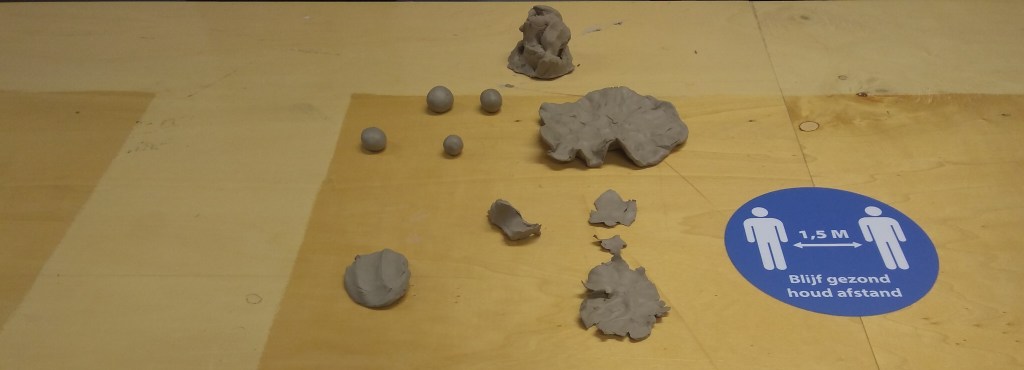
Our conversation started with the idea of proxemics. The numerical scale of interpersonal distances sounded odd. It seems to oversimplify parameters such as habits connected to culture, gender, specific occasion. We noticed, though, that social distancing (keeping 1,5 meters of distance) in times of COVID-19 is in accordance with the third category of proxemics, social distance/close phase (1,2 to 2,1 m).
First phase
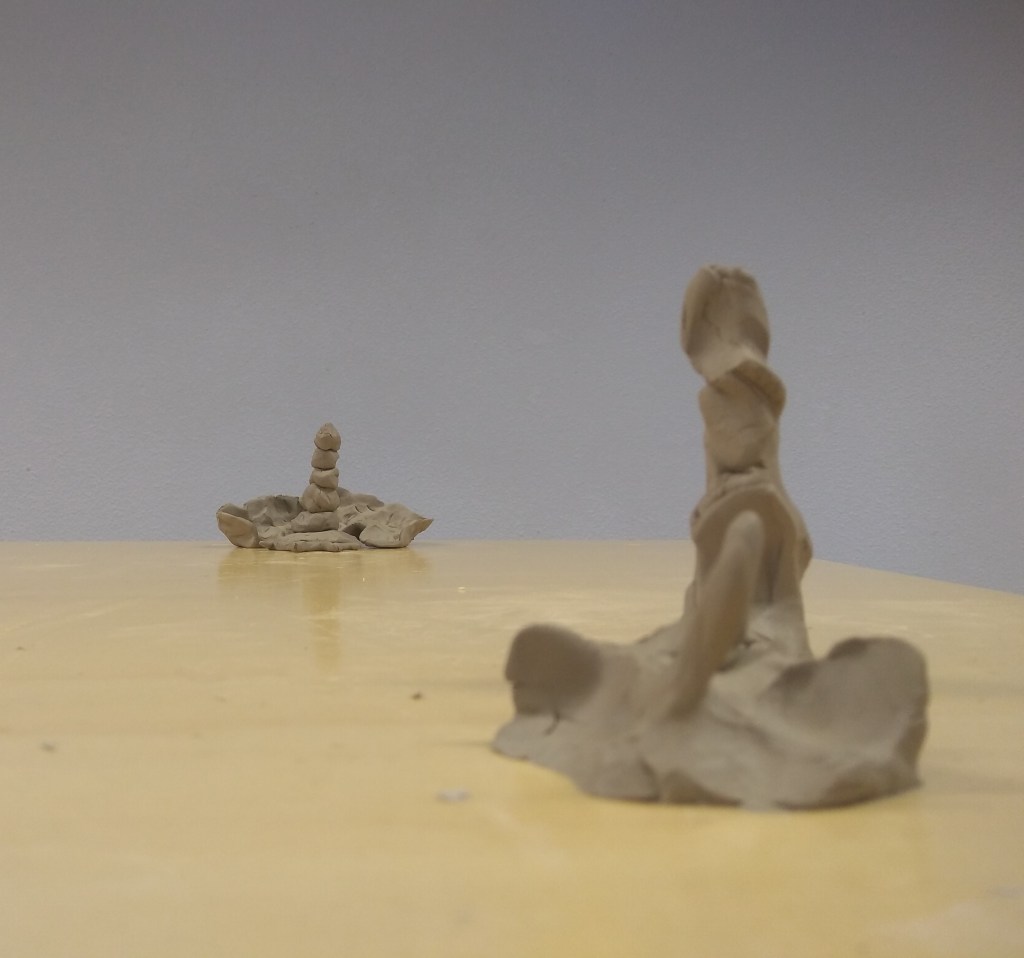
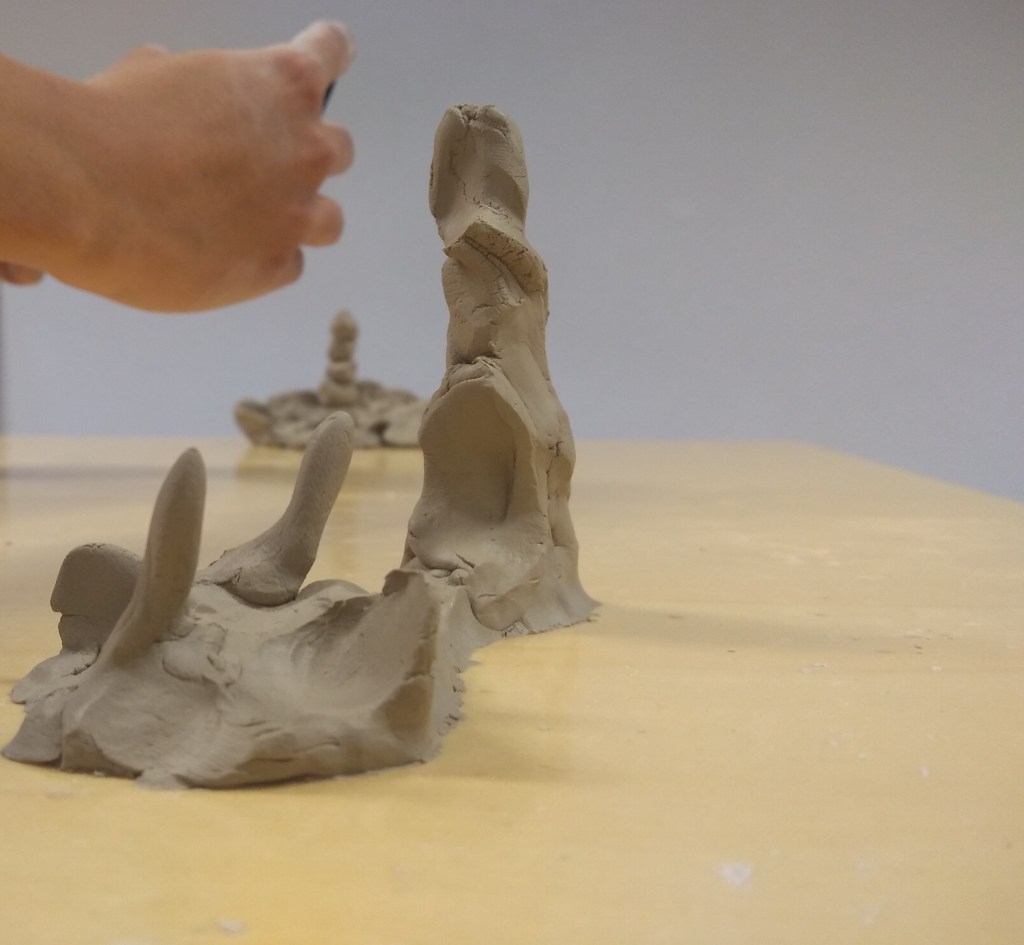
We decided to use the long table on the ground floor. We would stand in diverse distances (0,5 m to 4,5 m) around the table and have conversations. The subject of the conversation and its intimacy would be reverse to the physical distance. For example, I was standing very close to Korina (0.5 m) and we were discussing about Derrida. I was standing 4,5 m away from Anushka and we were talking about going to the toilet in the morning. During the conversations we were using clay to imprint our dialogues and lived experience.
.

.
Second phase
We re-enacted the distances and the dialogues of phase one and we mapped the levels of physical and dialogical intimacy.
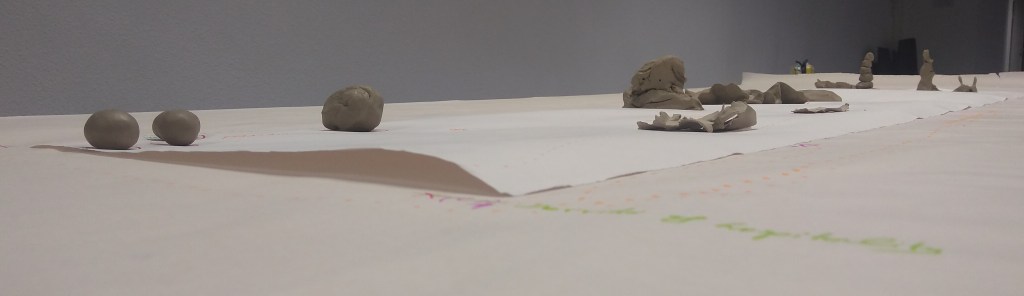
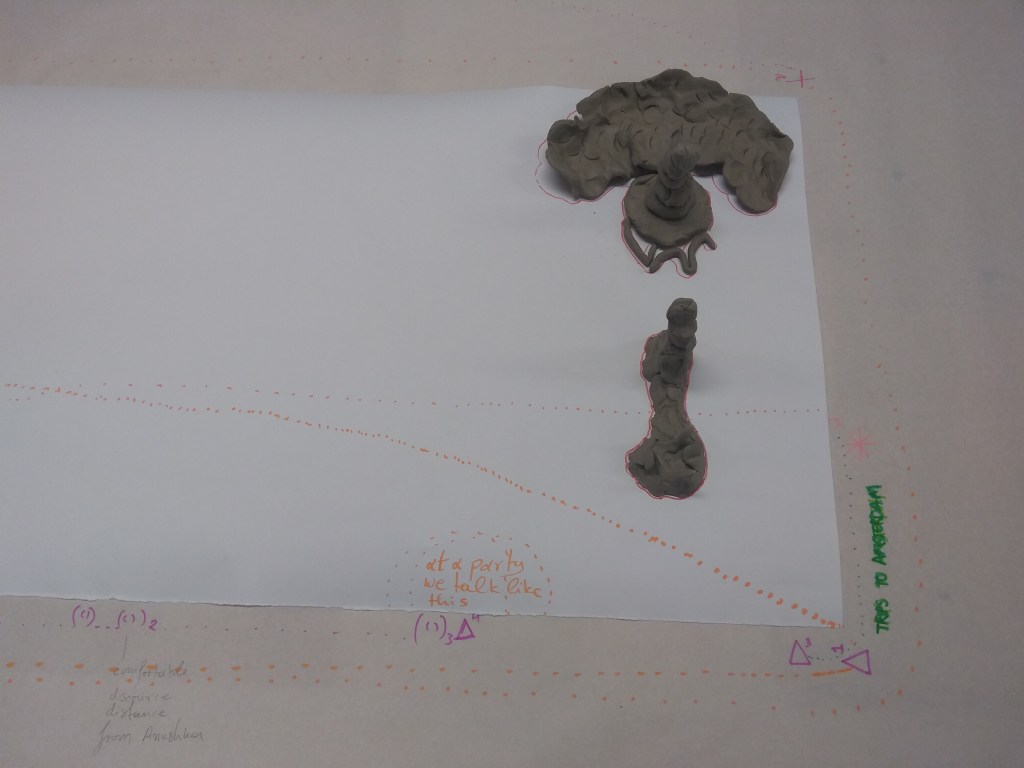
The scale of the map is 1:3. We used paper, colored pens and the clay from phase one. The first layer is drawing paper and serves as the space around the table. On top of that, we placed a thicker white paper that corresponds to the scaled down dimensions of the table itself. The signs visible on the map (triangle, X and parenthesis) indicate our changing positions around the table during phase one. The dotted colored lines note who was talking to whom. We positioned the clay sculptures on the white paper without scaling them down.
.

.


.
.
.
.
.

 performance practices_divergent temporalities